
Planning air travel for an older adult: do they need a Travel Companion?
by Magni Magnason
Most older adults can fly. What has changed is the travel day: long walks between gates, security, connections, bags, and plans that change without notice. A professional Travel Companion is an experienced caregiver who travels with the older adult from their front door to their destination and handles that day, so a capable person who needs a little help can keep making the trips that matter.
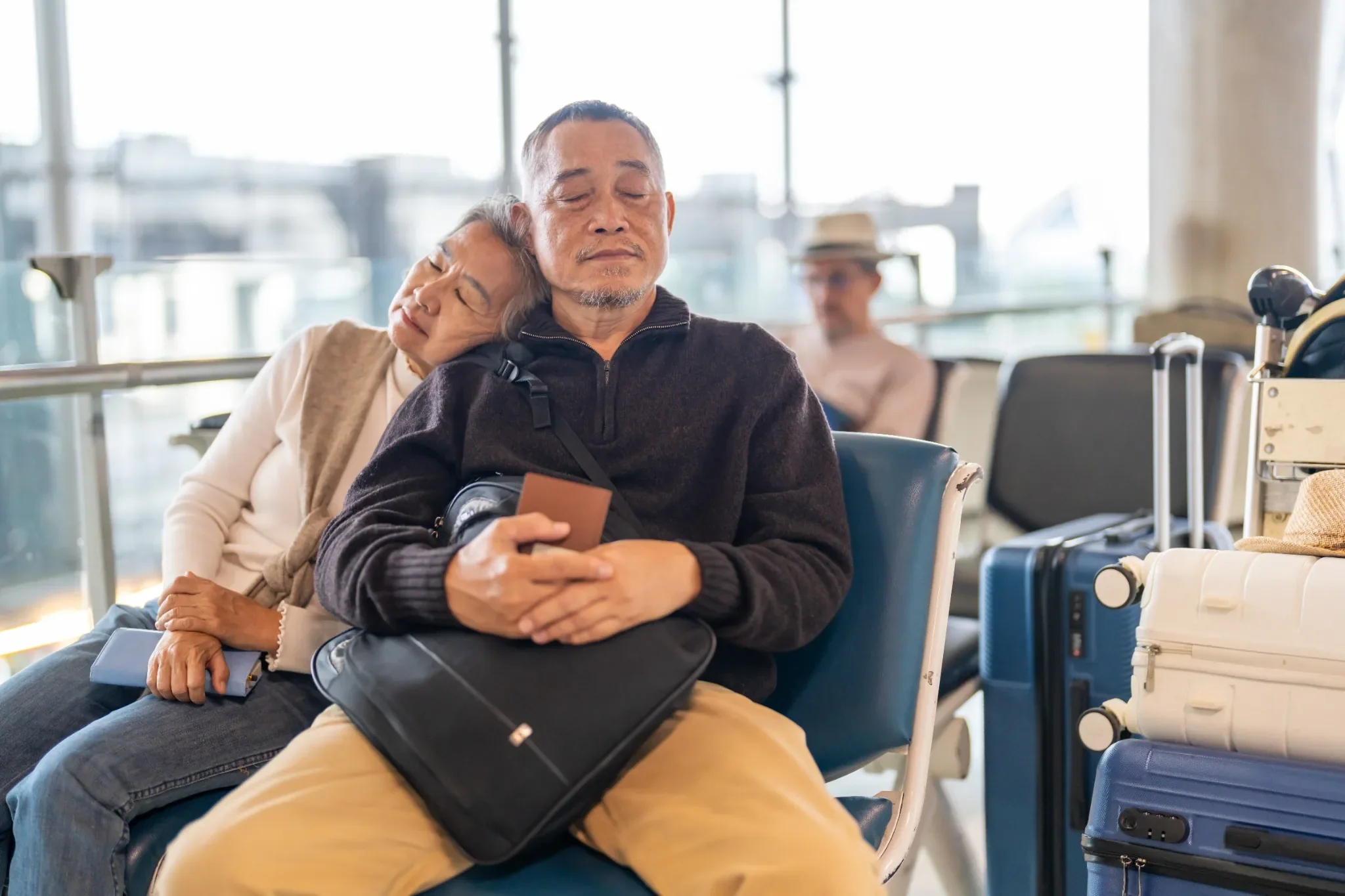
Is it safe for an older adult to fly alone?
Usually, yes. Age on its own does not make flying unsafe, and older adults fly alone every day. The better question is whether the whole travel day is manageable for this person: not the two hours in the seat, but the six or more hours from the front door to the destination.
A useful test is how the person manages at home. Someone who gets through a normal day on their own, including a trip to a busy shopping centre, will most often get through a direct flight on their own. Someone who already has help with daily living, tires easily, or finds crowded, unfamiliar places hard will need that help on the journey as well. Most people fall somewhere in between, and that is the group this guide is for: capable travellers who would do better with a little help.
What makes a travel day hard for an older adult?
The airport, more than the aircraft. A large Canadian airport can mean a walk of a kilometre or more between check-in, security, and the gate, and the same again at a connection. Security lines are crowded and move quickly. Gates change. Announcements are easy to miss. Bags have to be lifted onto belts, into bins, and off carousels. A delay or a cancellation means finding the right desk and rebooking, often while tired.
The flight adds a stressor of its own. A commercial aircraft cabin is pressurised to a cabin altitude of up to about 2,400 metres, or 8,000 feet, and the air is dry; at that altitude the amount of oxygen reaching the blood drops, the heart works a little harder, and the body dehydrates faster than it does on the ground. That is hard on everybody. A healthy younger person usually arrives tired and thinks nothing of it. An older adult, or anyone with a heart or lung condition, has less reserve to absorb it, and can land more worn out, more short of breath, or more confused than they boarded, which is exactly when the connection or the arrivals hall has to be managed.
Any one of those is fine for most people. A full day of all of them, on top of a flight that has already taken something out of the traveller, with no one to lean on, is different, and it is the reason some older adults stop travelling rather than face it.
Will airline wheelchair assistance be enough?
For many travellers, yes, and your Case Coordinator can arrange it on any trip we plan. Air Canada and WestJet provide wheelchair assistance and priority boarding, usually at no charge, when requested in advance. An attendant takes the traveller from check-in to the gate and, at the other end, from the aircraft to baggage or the curb. Our guide to airline accessibility services explains what to request and when.
What airline assistance does not do is stay. The attendant moves the traveller from one point to the next and then leaves to help someone else. There is no one with the traveller at the gate during a two-hour wait, no one on the flight, no one to help in the washroom or with a meal, and no one to take over when a connection is missed. Airline assistance is a transfer service, and a good one. It is not support for the whole journey.
What is a professional Travel Companion, and how is that different from asking a friend?
A Portage Travel Companion is an experienced caregiver who travels with the older adult for the whole journey and whose only job that day is the traveller. They meet the traveller at home, manage the bags, check-in, security, and boarding, stay with them through the flight and any connection, help with eating, the washroom, and getting comfortable, keep an eye on medication times, and see them to the people or the place waiting at the other end.
A family member or friend is often the right answer, and when one is free to go, we would say so. A professional Companion fills the gap when no one is free, when the help needed is personal care rather than company, or when the trip has connections, a long day, or a history of things going wrong. Behind the Companion there is also an organization: a Portage Case Coordinator who books the flights and ground transport, arranges airline assistance in advance, and is the person the family calls, and a plan for what happens if a flight is cancelled or a connection is missed. A friend on a favour has none of that behind them.
When is a Travel Companion worth considering?
When the traveller, or the person arranging the trip, is not confident the day will go well on its own. The signals we hear most often are an older adult who has become less confident flying, who tires more easily than they used to, who uses a cane or a walker, who has mild memory concerns, who has not flown in several years, or who is anxious about a large airport or a connection. Sometimes it is simply that the traveller would rather not do it alone.
Just as often the reason is the family. A parent is coming to a wedding, a milestone birthday, or a reunion, and the people who would normally travel with them are the ones organizing it. Or an older parent wants to visit their adult children in another city, and the children cannot take the days away from work to fly out, collect them, and repeat the trip twice. A Professional Travel Companion is how the trip goes ahead anyway.
Does an older adult need a Travel Companion or a Medical Escort?
Usually a Travel Companion. Age does not decide the level of support; the traveller's health does. A Travel Companion is the right level when the traveller's medical needs are stable, they manage their own medications with reminders, and what they need is personal care and someone to run the day. A Medical Escort is the right level when the journey needs clinical care in transit, for example medications that must be administered on the way, or a trip that follows a hospital stay.
You do not need to work this out yourself. Your Case Coordinator gets to know the traveller during intake and recommends the level of service before anything is booked, and we will not recommend clinical care a trip does not need.
How does a Travel Companion trip work?
Your Case Coordinator plans the whole trip with whoever is arranging it: the traveller, a family member, or an agency. That includes flights chosen for the traveller rather than the cheapest fare, airline assistance requested in advance, ground transport at both ends, and agreed points along the way where the family hears from us.
On the day, the Travel Companion arrives at the traveller's door and stays with them until the journey ends, whether that is a family member at the arrivals hall, a hotel, a new home, or a care residence. When it is time to come home, we do the same in reverse. If a family member wants to travel along, that works too; the Companion looks after the traveller so everyone can simply travel together, and we can make the arrangements for the whole party. Most of these trips are commercial flights within Canada. We also support international journeys and, for shorter trips, ground transport for the whole journey.
Where Portage fits
Portage provides a Travel Companion for older adults who need, or would simply prefer, support on a journey, and a Medical Escort when the journey needs clinical care. A Case Coordinator plans and books the trip; the Companion or Escort is with the traveller door to door. Read more about how we help older adults.
